A good sales call can still turn into a dead opportunity if the follow-up is vague, late, or trapped in someone's memory. The buyer may be interested, but interest has a short shelf life when work, inboxes, and other vendors are all yelling for attention.
A simple sales call follow-up system helps small businesses turn conversations into clear next steps, useful reminders, and cleaner decisions without chasing people like a raccoon with a calendar.
This guide is for consultants, local service businesses, freelancers, agencies, coaches, and small teams that already speak with prospects and want a calmer way to keep deals moving after the call.
What a sales call follow-up system is
A sales call follow-up system is the repeatable process used after a prospect conversation. It defines what gets sent, when it gets sent, who owns the next step, how reminders happen, and how the opportunity is marked when the buyer decides.
Without a system, follow-up becomes personal style. One person sends a clear recap. Another sends “great chatting” and hopes the buyer remembers the details. A third waits three days because they are busy. The prospect receives uneven communication, and the business loses visibility.
The goal is not to pressure every buyer. The goal is to remove confusion. A buyer should know what problem was discussed, what solution was proposed, what happens next, and how to say yes, no, or not yet.
Why follow-up matters after the call
Most sales conversations create several small decisions. The buyer may need to review pricing, ask a partner, compare options, check timing, gather documents, or confirm scope. If those steps are not captured, the deal drifts.
Strong follow-up helps you:
- Reduce forgotten opportunities.
- Shorten the gap between call and decision.
- Make the buyer feel organized instead of managed.
- Show professionalism before the client relationship begins.
- Learn why deals stall, close, or disappear.
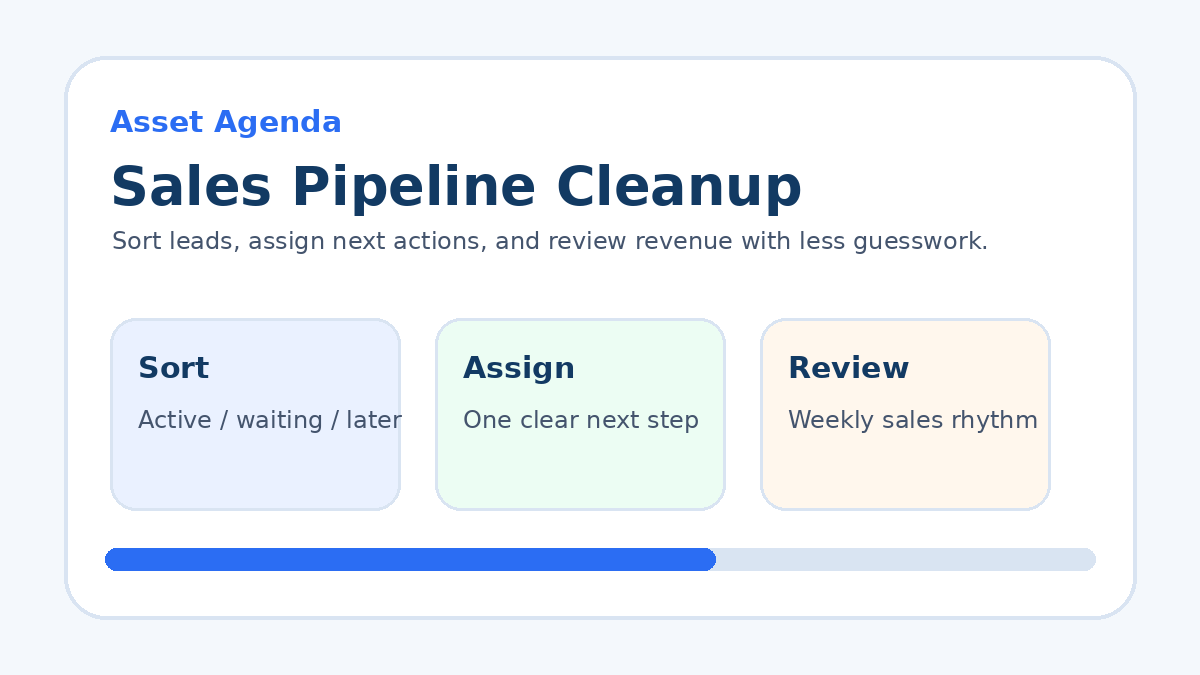
This connects closely with pipeline discipline. If your deals already feel messy, read the sales pipeline cleanup guide before adding more automation.
Start with a clear call outcome
Every sales call should end with one named outcome. That outcome may be proposal needed, invoice requested, second call booked, not a fit, follow up later, or waiting on buyer information.
The follow-up system works best when the call owner records the outcome before moving to the next task. Waiting until later invites memory theater, and memory theater is where good deals wander into the woods.
Use simple outcome labels:
- Ready for proposal: buyer wants a written scope or price.
- Ready to buy: buyer needs payment, contract, or booking instructions.
- Needs information: buyer must send details before you can quote or proceed.
- Follow up later: timing is real, but not immediate.
- Not a fit: close the loop respectfully and stop chasing.
Send a useful recap the same day
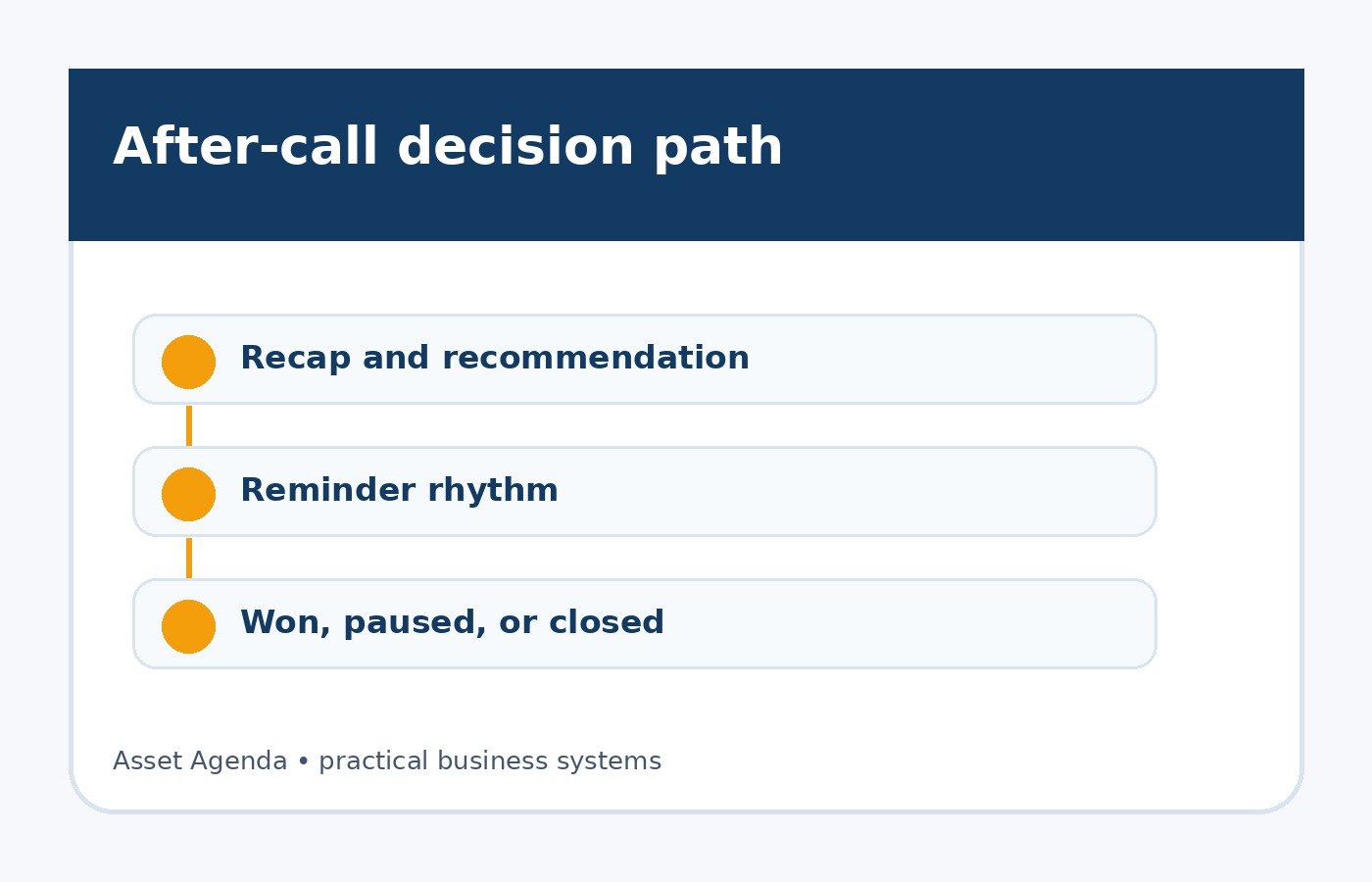
The first follow-up should usually go out the same business day. It does not need to be long. It should confirm the buyer's goal, the problem discussed, the recommended next step, and the action required.
A practical recap structure:
- Thank them for the conversation.
- Restate the main problem in their language.
- Summarize the suggested path.
- Name the next step, deadline, and owner.
- Include the link, attachment, quote, booking page, or payment step.
Example: “Based on our call, the main issue is that new leads are not receiving a fast reply after requesting an estimate. The first step is to tighten the response process before buying more traffic. I attached the proposed setup and included the booking link for a kickoff call if you want to move forward this week.”
Build a short reminder rhythm
Follow-up should be consistent without becoming annoying. A simple reminder rhythm gives the buyer enough space while protecting the opportunity from silence.
For many small businesses, this rhythm is enough:
- Day 0: same-day recap with the next step.
- Day 2: helpful reminder or answer to a likely question.
- Day 5: value-based follow-up with a relevant example, detail, or clarification.
- Day 10: polite close-the-loop message.
- 30 to 90 days: future follow-up only if timing was a genuine blocker.
The close-the-loop message is important. It gives the buyer an easy exit and keeps your pipeline honest. Something as simple as “Should I keep this open, or is this better to revisit later?” can turn silence into a real answer.
Use templates without sounding canned
Templates save time, but they should leave room for the buyer's actual situation. The first sentence and problem recap should be customized. The structure can stay the same.
Create templates for:
- Same-day call recap.
- Proposal sent reminder.
- Missing information request.
- Second-call booking reminder.
- Payment or agreement next step.
- Polite close-the-loop message.
If the buyer came from a service inquiry, the system may overlap with the estimate follow-up system. If the prospect started as an email subscriber, it may connect to the lead magnet follow-up system.
Track next actions in one place
A follow-up system needs one source of truth. That can be a CRM, spreadsheet, project board, or simple pipeline tool. The tool matters less than the habit: every open opportunity needs a next action and date.
Track these fields:
- Prospect name and contact details.
- Call date.
- Outcome label.
- Offer or service discussed.
- Next action.
- Next action owner.
- Follow-up date.
- Deal status.
- Reason won, lost, or paused.
For very small volume, a spreadsheet can work. When follow-up includes forms, appointments, SMS, email reminders, and pipeline stages, a platform like GoHighLevel can be worth comparing. The software should support the process, not hide a broken one under shiny buttons.
Measure the right follow-up signals
You do not need a giant dashboard to improve follow-up. Start by reviewing a few practical numbers each week.
- How many sales calls happened?
- How many received same-day follow-up?
- How many proposals or next steps were sent?
- How many opportunities have no next action?
- How many deals closed, paused, or went quiet?
- What reasons show up repeatedly when people do not buy?
These numbers reveal whether the problem is lead quality, offer clarity, pricing, timing, response speed, or weak follow-up. Fixing the true bottleneck is better than simply sending more messages.
Sales call follow-up checklist
- End each call with one clear outcome.
- Record the outcome before moving on.
- Send a same-day recap.
- Name the next action, owner, and date.
- Use a short reminder rhythm.
- Customize templates with the buyer's actual problem.
- Keep all open opportunities in one place.
- Close the loop when a buyer goes quiet.
- Review stalled deals weekly.
- Improve scripts and offers from repeated objections.
FAQ
How soon should you follow up after a sales call?
Same day is usually best. The buyer still remembers the conversation, and the recap shows that you are organized. If the call happens late in the day, send it the next morning.
How many times should you follow up before stopping?
For most small-business sales conversations, three to four thoughtful follow-ups are enough before a polite close-the-loop message. Continue later only when the buyer gave a real timing reason.
Should sales follow-up be automated?
Parts of it can be automated, especially reminders and standard templates. The problem recap, recommendation, and important decision points should still feel specific to the buyer.
The bottom line
A sales call follow-up system turns good conversations into organized decisions. Capture the call outcome, send a useful recap, set a simple reminder rhythm, and track every next action in one place. That is not flashy, but it is the kind of boring machine that quietly makes more money.
Want a clear next step?
Read the sales pipeline cleanup guide ->