A messy sales pipeline does not always look dramatic. Sometimes it is just a list of names, half-written notes, old proposals, unclear next steps, and a few leads you meant to follow up with last Tuesday. The danger is quiet: good opportunities get buried beside dead ones.
A simple sales pipeline cleanup helps solo operators separate real opportunities from noise, so follow-up becomes easier and cash flow becomes less mysterious.
This guide is for consultants, freelancers, creators, local service owners, and small teams who sell through calls, estimates, proposals, demos, or direct messages. You do not need a complicated CRM build. You need a cleaner way to know who is active, who is waiting, and what should happen next.
Why solo operators lose deals in the pipeline
Most small pipelines break for practical reasons. A lead asks for pricing, then disappears. A proposal gets sent but never receives a decision. A warm referral sits in an inbox. A past customer says “circle back later,” and later turns into fog.
The issue is usually not laziness. It is unclear ownership. When every lead has a different note style, status, and reminder method, the business owner has to rebuild context every time they look at the list. That burns attention and makes follow-up feel heavier than it should.
Start with four simple pipeline stages
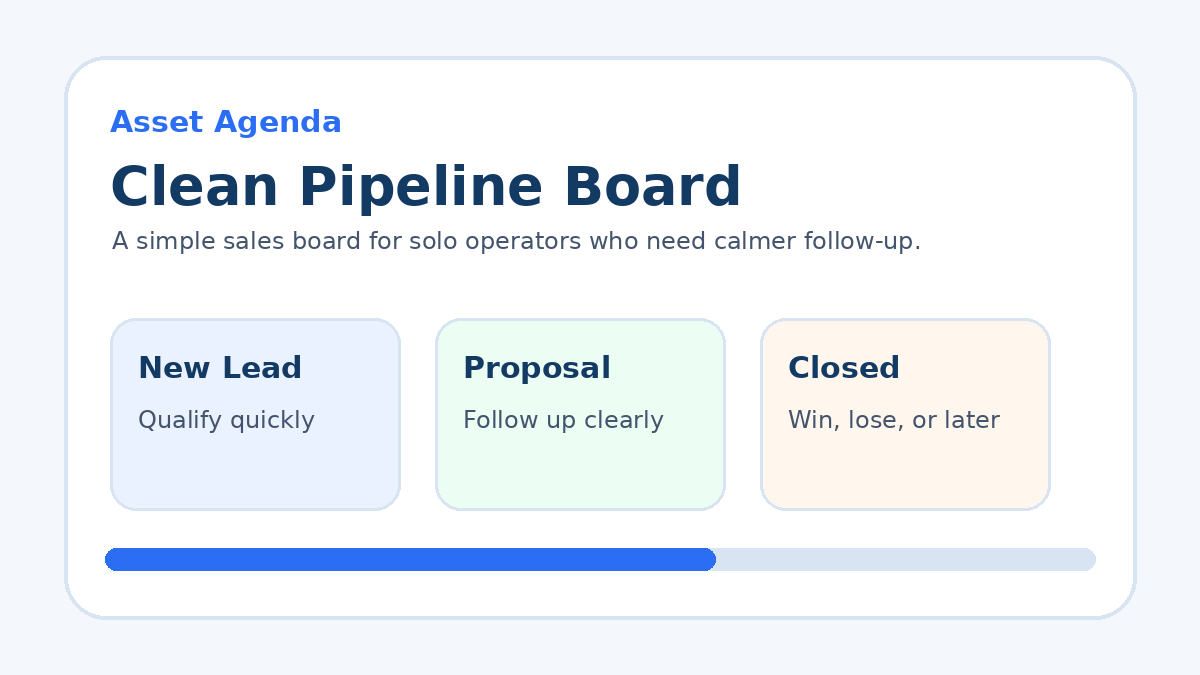
A solo operator does not need twelve deal stages. Start with four that match how small-business sales actually move:
- New lead: someone has shown interest but has not been qualified yet.
- Qualified conversation: the buyer has a real problem, budget range, and reason to act.
- Proposal or estimate sent: the next move is a decision, question, or revision.
- Won, lost, or later: the opportunity needs a final outcome so it does not haunt the list forever.
These stages are plain on purpose. If a lead cannot fit into one of them, the problem is usually the lead note, not the stage system.
Do a 30-minute sales pipeline cleanup
Open your current lead list, CRM, spreadsheet, inbox folder, or notebook. Then move through the list once without overthinking. Each lead gets one of five decisions:
- Active: there is a real next step within the next 14 days.
- Waiting: the buyer has a known reason for delay and a follow-up date.
- Nurture: they are a fit, but not ready for a direct sales push.
- Closed lost: the opportunity is done for now.
- Closed won: the sale happened and should move into delivery or onboarding.
The cleanup becomes useful when every active or waiting lead has a next action. “Follow up” is too vague. Better notes sound like “send two-option estimate Friday,” “ask if July timing still works,” or “send recap with warranty detail.”
Use a next-action field instead of relying on memory
The simplest sales tracking improvement is a next-action field. It should answer one question: what is the smallest useful action that moves this deal forward?
Examples:
- send a same-day call recap
- confirm whether the buyer wants option A or B
- share one relevant case study
- ask for the missing project detail
- close the loop if there is no response after the final reminder
This keeps the pipeline from becoming a storage room. A good pipeline is a decision tool. If the next action is unclear, the deal is not really being managed.
Build a daily 10-minute follow-up habit
Pipeline cleanup only matters if it changes behavior. Set one short daily sales block and review three groups:
- new leads that need a first response
- proposals or estimates waiting for a decision
- older warm leads with a dated reason to reconnect
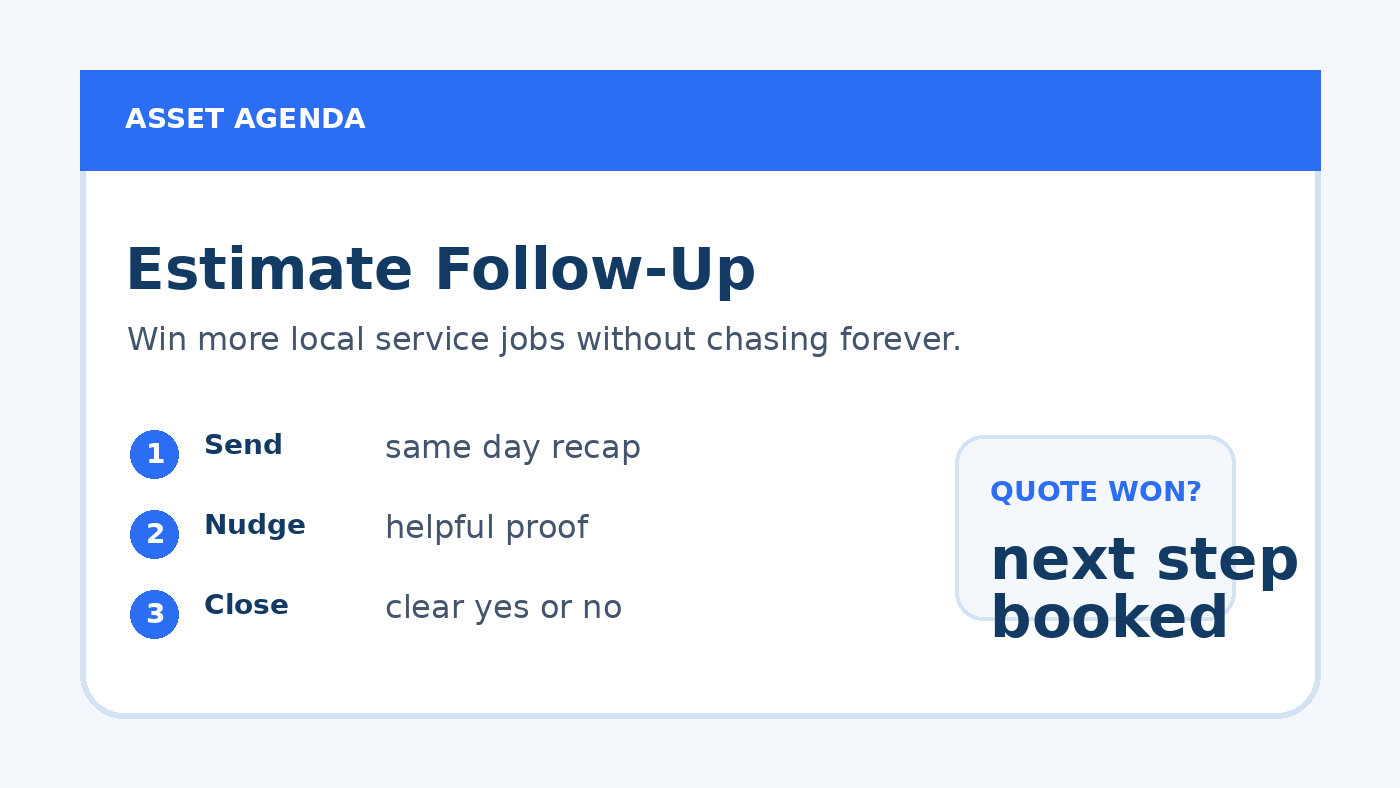
For local service businesses, this pairs well with a clear estimate follow-up system. For businesses that want a dedicated CRM and automation layer, the GoHighLevel guide can help compare whether that tool is a fit. The tool matters less than the rule: every real opportunity needs a status, owner, and next step.
What to remove from your pipeline
Some leads should leave the active view. Keeping every old name visible makes the business feel busier than it is and hides the deals that deserve attention.
Move a lead out of the active pipeline when:
- there has been no response after a clear final follow-up
- the buyer said the timing is not right and gave no realistic restart point
- the fit is poor, the budget is wrong, or the scope is not worth chasing
- the sale is won and needs delivery, not more selling
This is not giving up. It is protecting attention. A clean pipeline helps you sell with more calm and less inbox archaeology.
A simple weekly pipeline review
Once a week, ask five questions:
- How many real active opportunities do I have?
- Which leads need a decision this week?
- Which proposals have gone quiet?
- Which lead sources produced the best conversations?
- What follow-up habit would improve next week fastest?
If the answers are unclear, the pipeline needs better notes. If the answers are obvious, the cleanup is working.
FAQ
What is sales pipeline cleanup?
Sales pipeline cleanup is the process of reviewing every lead or deal, removing stale opportunities, updating stages, and assigning a clear next action to active prospects.
How often should a small business clean its pipeline?
A light review once a week is enough for many solo operators. If leads arrive daily, use a 10-minute daily follow-up check plus a deeper weekly review.
Do I need CRM software for pipeline cleanup?
No. A spreadsheet can work if it tracks lead name, stage, value, next action, owner, and follow-up date. CRM software becomes useful when reminders, automation, and reporting save more time than they add.
Final take
A clean sales pipeline is not about pretending every lead will close. It is about seeing the truth quickly. When stale deals leave the active view and real opportunities have specific next actions, follow-up gets lighter, sales conversations improve, and revenue becomes easier to manage.
Want a clear next step?
Read the estimate follow-up system ->