A local service business can do solid work, answer fast, send a fair estimate, and still lose the job because the buyer goes quiet. Silence does not always mean no. Sometimes the customer is comparing options, waiting for a spouse, unsure about scope, or buried under life with forty-seven browser tabs open.
A simple estimate follow-up system helps local service businesses turn sent quotes into clear decisions without sounding pushy, desperate, or robotic.
This guide is for contractors, cleaners, landscapers, repair companies, med spas, photographers, installers, home-service teams, and solo operators who send quotes or proposals and need a calmer way to follow through.
Why estimates go quiet after a good sales conversation
A quiet estimate usually has one of four problems. The buyer may not understand the difference between options. They may be unsure whether the price includes everything. They may like the company but have no clear booking path. Or they may simply be busy and need a useful reminder.
The weak fix is to send vague messages like “just checking in.” That puts all the work back on the buyer. A better follow-up gives the customer something useful: a recap, a deadline, a comparison point, a small piece of proof, or a simple booking step.
If leads are going quiet before estimates are even sent, start with a faster first-response process first. Asset Agenda’s missed-call follow-up system is a good companion for that earlier stage.
Build the estimate follow-up system around three decisions
The system does not need to be complicated. It needs to answer three decisions before the job disappears into the fog.
- Did the buyer receive and understand the estimate? The first message should confirm the scope, price range, and booking step.
- What concern might stop them? The second message should reduce uncertainty with proof, warranty details, timing, or a plain-language explanation.
- Should the opportunity stay open? The final message should give a clear yes, no, or later path.
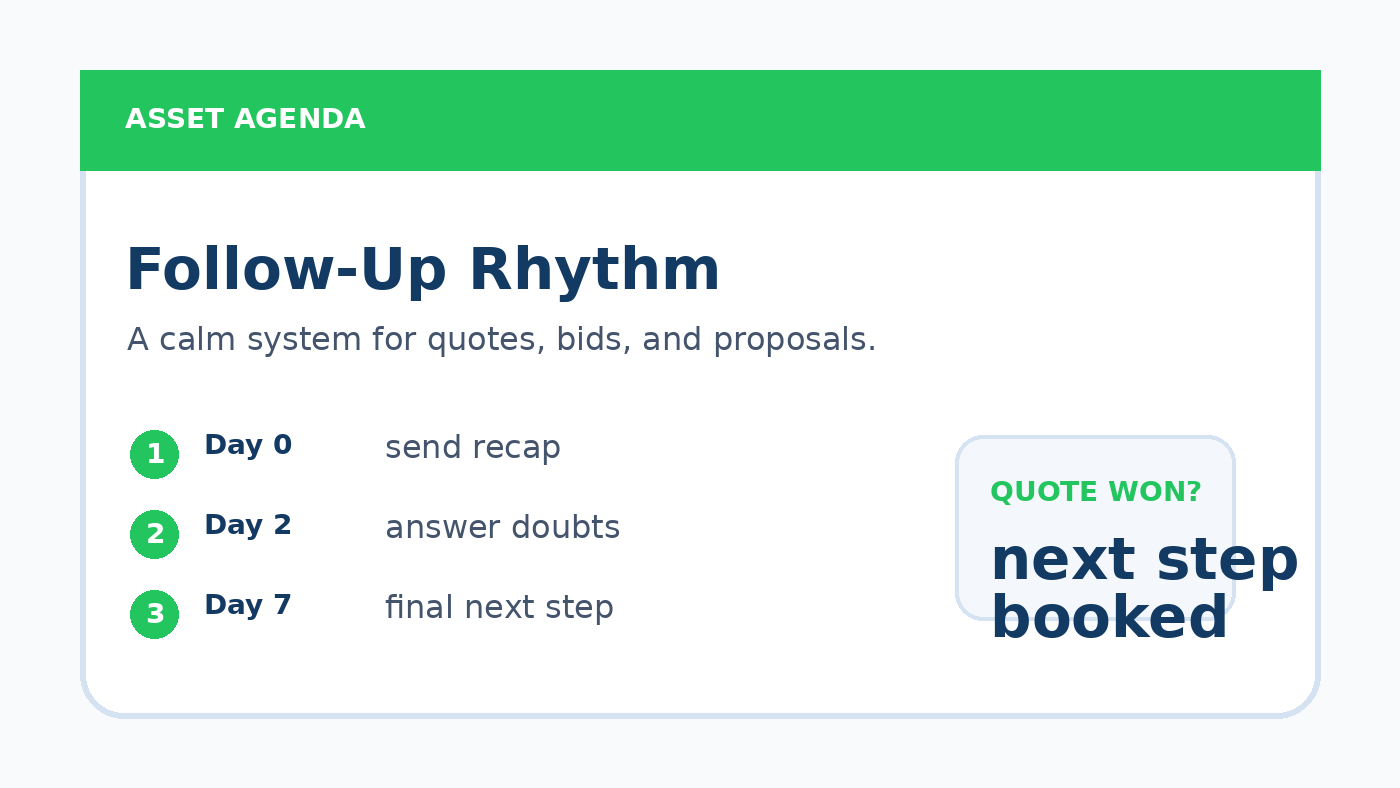
A simple seven-day follow-up rhythm
For many local service businesses, a seven-day rhythm is enough. Larger projects may need longer, but small jobs should not sit open for a month with no owner.
Day 0: Send the recap
Send the estimate with a short recap in the same message. Mention what is included, what is not included, how long the price is valid, and what the customer should do next.
Example: “Thanks again for walking through the project today. I attached the estimate for the repair and cleanup we discussed. It includes labor, materials, haul-away, and the one-year workmanship warranty. If you want to move forward, reply yes and I’ll send the scheduling link.”
Day 2: Remove one common doubt
The second message should not sound like a poke in the ribs. It should answer a normal buying concern. For example, share a similar job result, explain how scheduling works, or clarify what happens if the crew finds a small scope change.
Example: “Quick note in case it helps with your decision: most jobs like this take one day, and we confirm the arrival window the afternoon before. If we find anything outside the estimate, we pause and explain it before adding cost.”
Day 7: Close the loop cleanly
The final message should be respectful and direct. It gives the buyer a way to proceed, pause, or say no. This protects the pipeline and keeps the owner from carrying stale opportunities forever.
Example: “I’m closing the loop on this estimate for now. If you want the current price and schedule window, reply by Friday and I’ll help book it. If timing changed, no problem at all.”
What to track each week
The follow-up system gets better when the business tracks a few simple numbers:
- Estimates sent: how many quotes went out this week.
- Estimate response rate: how many customers replied after the estimate.
- Jobs won: how many accepted and booked.
- No decision: how many went quiet after all follow-up.
- Reason lost: price, timing, competitor, scope, fit, or no answer.
This pairs well with a weekly cash-flow review, because quote follow-up affects future revenue before the bank account shows the problem.
Use templates, but keep them human
Templates are useful because they prevent missed follow-up. They become a problem when every buyer receives the same empty message. A good template should leave room for one specific detail from the conversation.
Use fields like customer name, project type, quoted option, deadline, warranty, and booking link. Then add one human sentence: “You mentioned wanting this finished before the family visit, so I marked the earlier schedule window below.” That one sentence does more than a paragraph of generic charm.
When software helps
A spreadsheet can work when the business sends a few estimates each week. Once quotes increase, follow-up gets easier with a CRM, calendar, text reminders, and pipeline stages. The useful setup is simple: new estimate sent, first follow-up due, second follow-up due, won, lost, and later.
If a business also needs landing pages, forms, calls, text follow-up, and pipeline tracking in one place, the Asset Agenda GoHighLevel guide explains when that kind of tool makes sense. It is not required for every shop, but it can be useful when follow-up is leaking revenue across too many apps.
Common mistakes to avoid
- Sending only the estimate file. Add a short recap so the customer understands the offer.
- Following up with guilt. Buyers do not owe a decision just because a quote was sent.
- Leaving out the next step. Every message should make the booking path obvious.
- Keeping dead quotes open forever. Close the loop so the pipeline stays honest.
- Ignoring lost reasons. A few repeated reasons can reveal pricing, scope, or sales process issues.
FAQ
How many times should a local business follow up after an estimate?
For most small service jobs, two to three follow-ups over seven to ten days is enough. Larger projects may justify a longer rhythm, especially if financing, permits, or multiple decision makers are involved.
Should estimate follow-up be email, text, or phone?
Use the channel the buyer already used, then add phone for higher-value jobs. Text is useful for fast reminders, email is better for details, and phone is best when the buyer has questions or the quote needs explanation.
What if customers say the price is too high?
Do not drop the price by reflex. Ask what they are comparing against, restate what is included, and offer a smaller scope if appropriate. If price objections repeat every week, review the offer, proof, and positioning before cutting margin.
The bottom line
An estimate follow-up system is not about pestering people. It is about helping buyers make a clear decision and helping the business stop losing good opportunities to silence. Send the recap, answer the likely concern, close the loop, and track what happens next. Tiny sales broom, big cleanup.
Want a clear next step?
Read the missed-call follow-up system ->