
A retainer can make freelance or consulting income calmer, but only if the offer is clear. Too many retainers are sold as vague monthly access: a few calls, some support, maybe strategy, maybe delivery, maybe “whatever comes up.” That sounds flexible until the client expects unlimited help and the freelancer quietly becomes a discount employee with worse snacks.
A simple retainer offer gives freelancers and consultants a repeatable monthly service with a clear outcome, clear boundaries, and a renewal rhythm that protects cash flow.
This is useful for consultants, designers, marketers, copywriters, virtual assistants, bookkeepers, operations specialists, web pros, and small agencies that want recurring revenue without creating a messy custom job every month.
What a retainer offer is
A retainer offer is a recurring service agreement where the client pays on a monthly rhythm for continuing work, support, strategy, or access. The useful version is not just a prepaid bucket of hours. It is a packaged monthly outcome.
For example, a weak retainer says, “You get ten hours per month.” A stronger retainer says, “Each month we maintain your newsletter, update your lead magnet funnel, review performance, and send one improvement plan.” The second offer tells the client what will keep happening and why it matters.
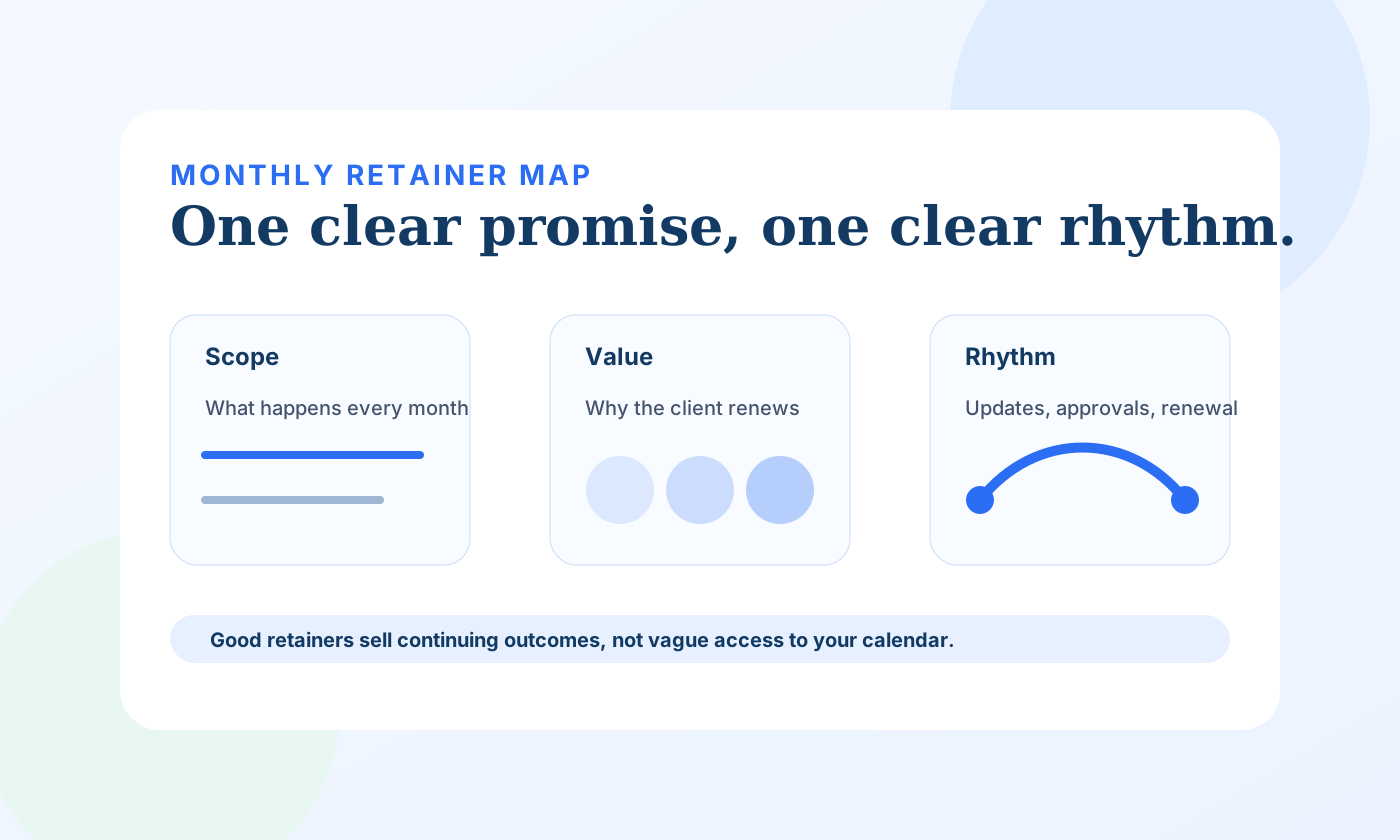
A simple retainer has five parts:
- Outcome: what business result the retainer protects or improves.
- Scope: what is included each month.
- Rhythm: when work happens, when updates are sent, and when calls happen.
- Boundaries: what costs extra, what waits, and what is not included.
- Review: how value is measured before the next renewal.
Why retainers help cash flow
Project work often creates lumpy income. One month is busy, the next month is quiet, and the owner is trying to make pricing decisions from the emotional weather report. Retainers can smooth that out because part of the month is already booked before new sales happen.
That does not mean every service should become a retainer. A retainer works best when the client has a continuing need and the provider can create repeatable value. If the work is truly one-time, forcing it into a monthly package creates churn and resentment.
Use the weekly cash-flow review alongside retainer planning. Recurring revenue only helps if you can see deposits, renewals, expenses, and delivery capacity before the month gets noisy.
Start with the problem that repeats
The easiest retainer to sell is built around a problem the client keeps having. Look for needs that return every week or month:
- content needs to be published
- leads need follow-up
- reports need review
- ads need maintenance
- bookkeeping needs cleanup
- web pages need updates
- clients need onboarding
- email sequences need improvement
- operations need a recurring checkup
If the problem does not repeat, the retainer will feel invented. If the problem repeats and the client already feels the pain, the offer has a real reason to exist.
Choose one retainer model
Most freelancers do not need a complicated menu. Pick one model first and make it easy to understand.
1. Maintenance retainer
This keeps something working. It fits websites, email systems, automations, bookkeeping cleanup, dashboards, CRM hygiene, or reporting.
Example: “Monthly website care: updates, small fixes, uptime checks, one improvement recommendation, and a monthly summary.”
2. Growth retainer
This improves a channel over time. It fits email marketing, SEO content, lead generation, conversion work, sales follow-up, and customer retention.
Example: “Monthly lead follow-up improvement: review new leads, improve one sequence, update response scripts, and report booked-call movement.”
3. Advisory retainer
This gives the client recurring thinking, decision support, and review. It fits strategy consultants, operators, finance guides, marketing advisors, and coaches.
Example: “Monthly operator review: one planning call, one scorecard review, one written action plan, and async questions within agreed limits.”
4. Delivery retainer
This delivers a repeatable amount of work each month. It fits writing, design, video clips, landing-page updates, newsletters, reporting, or admin support.
Example: “Monthly newsletter system: four emails, one topic plan, one list cleanup review, and one performance note.”
Write the offer in plain language
A strong retainer offer should be easy to explain in one paragraph. Use this format:
Each month, I help [type of client] keep [business area] moving by delivering [included work] on [rhythm], with [communication/update rule], so they can [outcome].
Example:
Each month, I help local service businesses improve lead follow-up by reviewing missed leads, updating one follow-up sequence, checking booked-call movement, and sending a short action report every Friday, so fewer warm prospects disappear after the first contact.
That is cleaner than “monthly marketing support.” It shows the buyer what they are paying for.
Set scope before selling
Retainers become painful when the scope is left open. A client hears “monthly support” and fills in the blank with every task they have avoided since spring.
Decide these rules before the proposal goes out:
- how many deliverables are included
- how many calls are included
- how fast normal replies happen
- what counts as urgent
- how revisions work
- what happens to unused work
- what counts as a new project
- which tools or accounts the client must provide
Clear limits do not make the offer less attractive. They make it safer to buy. Serious clients want to know how the relationship works.
Price from value and capacity
A retainer price should not come only from hours. Hours matter because capacity is real, but clients renew because the monthly value is clear.
Start with three checks:
- Delivery load: how much time and attention the retainer truly needs.
- Client value: what the work protects, improves, or helps the client earn.
- Capacity limit: how many clients you can serve without quality dropping.
If a retainer takes ten hours and sells for a tiny fee, it will crowd out better work. If it promises a giant outcome with no delivery system, it will create stress. The goal is a price that fits the value and leaves room to do the work well.
If your packages are still fuzzy, read the simple offer ladder for freelancers. Retainers are easier to sell when they connect to a clear entry offer, core project, or ongoing support path.
Create a monthly delivery rhythm
The client should never wonder what is happening this month. Build a rhythm you can repeat:
- Start-of-month plan: confirm priorities, deliverables, and any client inputs needed.
- Mid-month progress check: send what is complete, what is blocked, and what is next.
- End-of-month review: summarize work completed, results, decisions, and next-month focus.
- Renewal or adjustment point: keep, pause, upgrade, or change the scope based on evidence.
This rhythm reduces client anxiety and protects your time. It also creates proof. If the client sees progress, renewal becomes a business decision instead of a guessing game.
When software helps
You can run a retainer with email, invoices, a shared folder, and a monthly checklist. That is enough at the beginning.
Software helps when you manage repeating lead follow-up, client communication, tasks, forms, calendars, and reminders across several accounts. If you are evaluating a CRM or automation platform for that kind of work, the Asset Agenda GoHighLevel guide can help you decide if it fits the operating load. Do not buy software to hide a fuzzy offer. Make the retainer clear first.
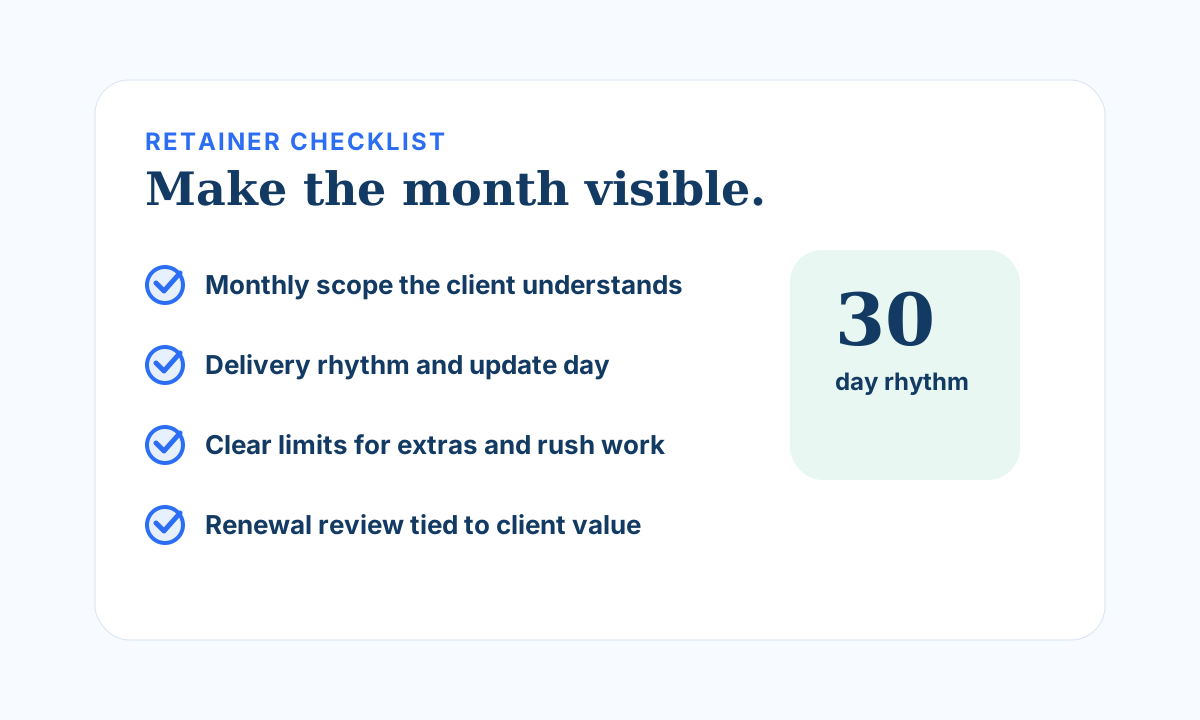
A simple retainer setup checklist
- Name the repeating client problem.
- Choose one retainer model: maintenance, growth, advisory, or delivery.
- Write the monthly promise in one paragraph.
- List exactly what is included.
- List what costs extra.
- Set the update rhythm.
- Set the billing date and payment terms.
- Create one monthly review template.
- Decide the renewal, pause, and cancellation rules.
- Offer it first to clients who already trust your work.
Common retainer mistakes
- Selling hours instead of outcomes: clients care less about your calendar and more about progress.
- Leaving scope open: vague retainers become unlimited task buckets.
- No monthly proof: clients forget value they cannot see.
- Pricing too low: recurring work can still be unprofitable if it eats your best hours.
- Skipping renewal reviews: the relationship drifts until someone gets uncomfortable.
FAQ
What is a good retainer offer for freelancers?
A good retainer offer for freelancers provides a clear monthly outcome, a defined scope, a delivery rhythm, and simple boundaries. It should solve a repeating client problem rather than sell vague access to your time.
How should consultants price a monthly retainer?
Consultants should price a monthly retainer from delivery load, client value, and capacity. Hours matter, but the offer should also reflect the business value of the recurring outcome.
What should be included in a retainer agreement?
A retainer agreement should include the monthly scope, deliverables, communication rules, payment terms, revision limits, response expectations, renewal timing, pause rules, and what counts as extra work.
Are retainers better than project work?
Retainers are better when the client has a repeating need and the service creates ongoing value. Project work is better when the need has a clear finish line. Many businesses use both.
The bottom line
A retainer is not magic recurring revenue. It is a promise you have to keep every month. The clean version is simple: one repeating problem, one monthly outcome, one delivery rhythm, and one review process.
Start small. Build the first retainer around work you already know how to deliver well. Make the scope clear, show progress every month, and let the renewal conversation rest on visible value instead of hope and awkward smiles.
Want a clear next step?
Read the offer ladder for freelancers ->