Most creators and consultants do not have an idea problem. They have a reuse problem. A useful insight gets posted once, disappears into the feed, and then the business starts hunting for another fresh idea like a raccoon with a marketing calendar.
A simple content repurposing system helps creators and consultants turn one strong idea into several useful assets without watering down the message.
This guide is for solo operators, advisors, coaches, service providers, newsletter writers, and small teams who want content to support leads, trust, and sales without living inside a posting treadmill.
What a content repurposing system is
A content repurposing system is a repeatable way to turn one core idea into several formats. The idea stays the same, but the packaging changes based on where the buyer is in their decision.
For example, one strong idea can become:
- a short educational post
- a longer email lesson
- a lead magnet section
- a sales call talking point
- a customer onboarding note
- a follow-up message for quiet prospects
The system matters because different people need the same idea at different times. A stranger may need a quick tip. A warm lead may need proof. A buyer may need reassurance after purchase.
Start with one buyer problem, not one platform
The weakest repurposing starts with “what should I post today?” The stronger question is “what problem does my buyer keep misunderstanding?”
Good source ideas usually come from real friction:
- questions prospects ask before buying
- mistakes clients make before hiring help
- objections that slow down decisions
- steps people skip because they seem boring
- small wins that make the bigger outcome easier
If you sell a service, your best content often hides inside sales calls, delivery notes, proposals, and client conversations. If you sell a digital product or newsletter, it may come from comments, replies, refund reasons, and subscriber questions.
Build the anchor asset first
An anchor asset is the main version of the idea. It gives you enough depth to reuse the point without starting over each time.
The anchor asset can be a blog post, email lesson, short video outline, podcast segment, worksheet, or checklist. The format matters less than the job: explain the problem, show why it matters, give a practical fix, and point to the next step.
A simple anchor structure works well:
- Name the problem: what is happening?
- Explain the cost: what does it quietly damage?
- Show the better method: what should the buyer do instead?
- Give an example: what does this look like in real work?
- Offer the next step: what should they read, download, book, or buy?
Turn the anchor into smaller assets
Once the anchor exists, pull it apart carefully. Repurposing is not copying the same paragraph across every channel. It is adapting the same useful idea to different attention levels.
One anchor asset can become:
- Three short posts: one mistake, one example, one practical tip.
- One email: a deeper lesson with a direct next step.
- One sales asset: a proof point or objection answer for prospects.
- One lead magnet section: a checklist, worksheet, or scorecard item.
- One customer asset: a simple onboarding or implementation note.
This is where content starts supporting the business instead of only filling a calendar. A useful idea can help strangers understand the problem, help warm leads trust your approach, and help buyers get better results after the sale.
Match each format to a business job
Repurposed content works best when every piece has a clear job. Otherwise, the system turns into busy work wearing a tiny productivity cape.
Use this simple map:
- Awareness: quick posts that name the problem clearly.
- Trust: examples, lessons, and stories that show how you think.
- Conversion: comparison points, objection answers, and next-step pages.
- Retention: onboarding notes, usage tips, and simple reminders.
If your offer uses funnels, email follow-up, booking pages, or a CRM, connect the content to those systems. A practical stack can be as simple as a website, an email tool, and a lead tracker. For operators comparing all-in-one sales software, the GoHighLevel guide is one useful place to understand that option without treating it like magic beans.
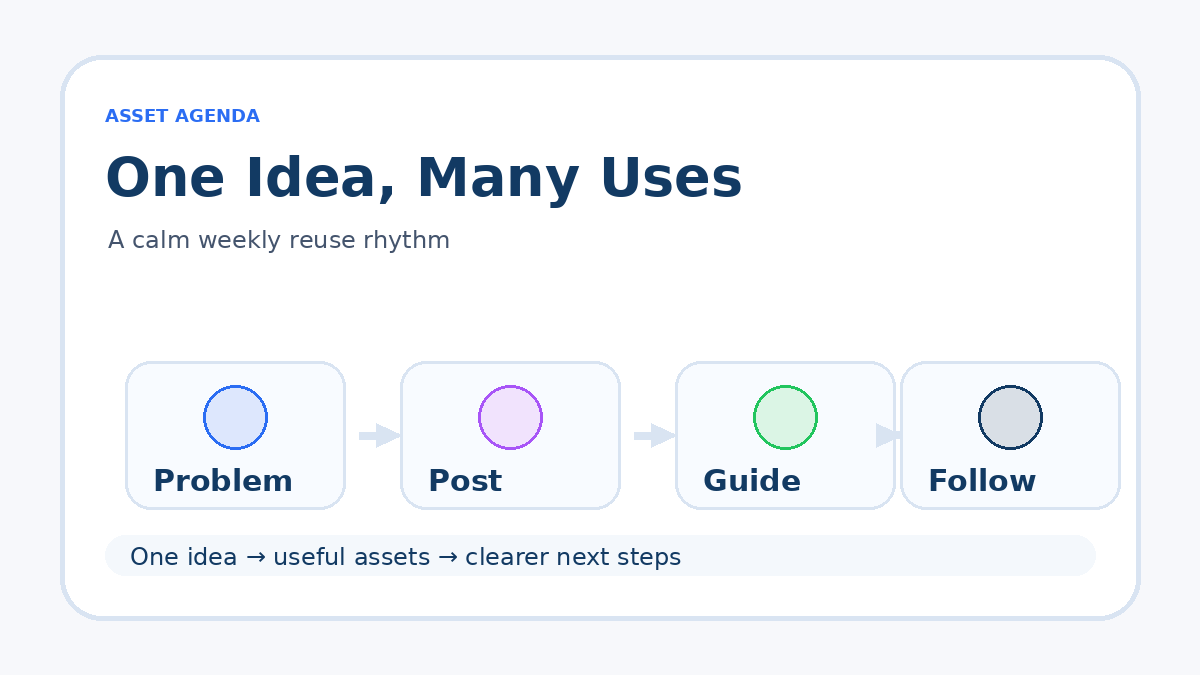
A weekly content repurposing rhythm
A small weekly rhythm is easier to maintain than a giant content machine. Try this:
- Monday: choose one buyer problem and draft the anchor.
- Tuesday: publish or schedule the main asset.
- Wednesday: extract two short posts from the strongest points.
- Thursday: turn one section into an email or newsletter lesson.
- Friday: add one piece to a sales page, proposal note, lead magnet, or onboarding message.
This keeps content tied to revenue systems instead of only public visibility. The quiet assets often matter most: the email someone reads before booking, the follow-up that answers a doubt, or the onboarding note that prevents confusion.
Useful next reads for this system
If your repurposed content needs a clearer offer path, read the simple offer ladder guide. If you are building an email path from your ideas, the email welcome sequence guide will help. If your content supports recurring revenue, the paid newsletter offer guide is a natural next step.
FAQ
How many pieces should one idea become?
Start with three to five. More is possible, but only if the pieces stay useful. A strong small system beats a giant schedule full of weak repeats.
Should I post the same idea on every platform?
Not exactly. Keep the core lesson, but adjust the format. A social post can name the mistake, an email can explain the fix, and a sales page can connect the idea to the buying decision.
What if I do not have many original ideas yet?
Use buyer questions. Every repeated question, objection, or confusion point can become an anchor asset. The best business content usually starts close to real customer friction.
The practical takeaway
A content repurposing system does not require a huge audience or a complicated calendar. It requires one clear buyer problem, one useful anchor asset, and a calm habit of adapting that asset for discovery, trust, sales, and retention.
Do that consistently and content stops feeling like daily noise. It becomes a business asset that compounds quietly, which is the least dramatic but most useful kind of business magic.
Want a clear next step?
Read the email welcome sequence guide ->